
Beyond the Firewall: Third-Party Risk and the Open-Source Supply Chain in African Tech
A recent ethical hack in South Africa exposed critical data linked to a major bank, not through a direct attack, but via a third-party supplier. This incident…
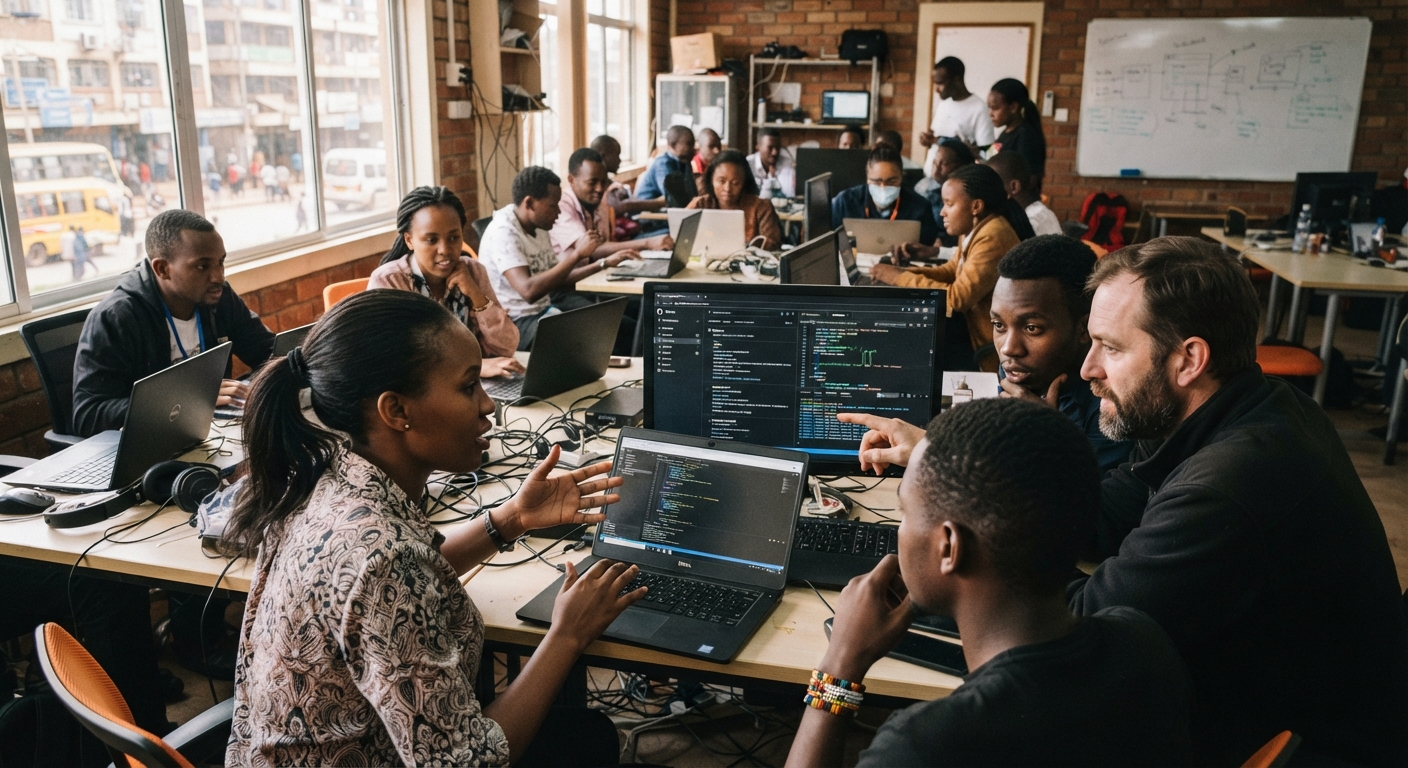
In an increasingly interconnected digital landscape, the security of an organisation extends far beyond its own firewalls. For African developers and Chief Technology Officers (CTOs) leveraging the power of open-source software, a recent incident in South Africa serves as a potent reminder: the true perimeter of your data is defined by the weakest link in your entire supply chain, especially where open-source components are involved.
An authorised security assessment conducted by South African ethical-hacking firm Kingly Clark recently highlighted this critical vulnerability. Tasked with testing the defences of a local company – a third-party supplier to a major financial institution – Kingly Clark deployed an advanced, AI-driven system. The objective was not to attack the financial institution directly, but to see how far an authorised assessment could penetrate the supplier's environment.
The Unseen Path to Sensitive Data
The AI system didn't just find a single open door; it meticulously mapped the internal landscape of the client company. It traversed internal email threads, document stores, login credentials saved on shared drives, and comprehensive client files. Crucially, it delved into contracts – extracting client names, account references, and details of connected systems. This systematic exploration painted a complete picture of the company's operations and, more importantly, its relationships.
The outcome was startling. Without ever touching the financial institution's own systems, the AI-driven assessment surfaced data directly linked to one of South Africa's Big Five banks. The bank's own robust defences remained unbreached. The exposure came entirely through a trusted supplier, whose internal data environment held the keys.
The Open-Source Supply Chain Connection
This incident offers a profound lesson for the African tech community, particularly those deeply embedded in the open-source ecosystem. Many third-party suppliers, from small startups to established service providers, build their solutions upon, or heavily integrate with, open-source libraries, frameworks, and tools. A vulnerability in any of these components, or a misconfiguration within a system built using them, can create the very 'open door' that the AI system exploited.
Consider the analogy: your application might be rock-solid, but if a third-party API you integrate with uses an outdated open-source library with known flaws, or if their internal systems (potentially running on open-source infrastructure) are poorly secured, your data is at risk. The AI's ability to 'walk' the network, connecting disparate pieces of information – a credential here, a contract there – mirrors how a sophisticated attacker might chain together vulnerabilities across an open-source dependency tree to achieve their objective.
AI-Driven Threats Demand AI-Driven Defence
The speed and comprehensiveness of the AI-driven assessment underscore a new reality in cybersecurity. Traditional, human-led penetration tests are valuable, but an AI system can analyse vast amounts of data and identify complex relationships at machine speed. This means that vulnerabilities in the open-source supply chain, if left unaddressed, can be exploited far more rapidly and extensively than ever before.
For African CTOs and developers, this necessitates a proactive approach to open-source supply chain security. It's no longer enough to scan your own code; you must understand the security posture of every dependency, every third-party service, and every open-source component they rely on. Implementing Software Bill of Materials (SBOMs) to catalogue all software components, conducting regular vulnerability assessments of third-party integrations, and fostering a culture of security awareness across the entire development lifecycle are paramount.
Intriguingly, the ethical hackers behind this assessment hinted that the same AI technology being used for offence is also being developed for defence. This suggests a future where AI agents are crucial for detecting and responding to threats within complex software supply chains, including those originating from open-source dependencies.
Securing Africa's Digital Future
This incident is a wake-up call. As Africa's digital economy grows, powered significantly by open-source innovation, the focus on securing the open-source supply chain must intensify. The lesson is clear: robust perimeter defences are essential, but true resilience comes from understanding and securing every link in the chain, especially those you don't directly control but rely upon.
Powering Africa's Code: A Collaborative Funding Revolution
African maintainers launch a new collective to fund vital open-source libraries. Discover how this strengthens the continent's digital infrastructure.
From Licenses to Liberation: SA's Open Source Pivot
South African government agencies are trialing Linux and open standards to slash licensing costs. Discover how this move could redefine public sector IT in…
From Commits to Continental Impact: Africa's Open Source Boom Signals New Era
Discover how Africa's GitHub activity surged 62% year-on-year, driven by Python and Rust, signaling a new era for continental tech innovation and talent.